


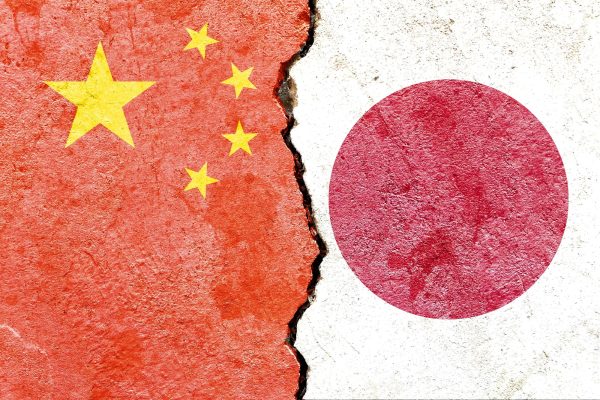

Tensions between China and Japan have entered a new and more volatile phase following Beijing’s decision to impose export controls on certain dual-use goods destined for Japan.
On January 6, China prohibited dual-use goods, including some rare earth elements, from being exported to Japan with immediate effect, according to a statement from the Ministry of Commerce. Duel-use goods are technologies, products, or software with both military and civilian uses. They include advanced materials, precision machinery, semiconductors, and chemical components that are essential to modern economies but can also enhance military capabilities.
By restricting such exports to Japan, China is signaling its willingness to weaponize its dominant position in certain supply chains. This is particularly significant given the deep economic interdependence between the two countries: China is Japan’s largest trading partner, and Japanese firms remain deeply embedded in Chinese manufacturing and technology ecosystems.
Beijing’s decision is a response to the Japanese prime minister’s recent divisive comments regarding Taiwan. Prime Minister Takaichi Sanae said in November 2025 that a possible Chinese military assault on Taiwan might legally be seen as a threat to Japan’s survival.
China’s new export controls could have far-reaching consequences for Japan, particularly its vital automotive industry. The implied pressure over rare earths echoes a well-worn strategy Tokyo has encountered before. Beijing suspended rare-earth supplies to Japan for two months in 2010 due to a territorial dispute. This time, China perhaps intends to engineer a de facto export restriction and employ extensive screening to make sure rare earths are not used for military purposes.
Japan’s reliance on Chinese rare earths has decreased from 90 percent in 2010 to about 60-70 percent presently after spending the majority of the last 15 years diversifying its supply chains. However, China continues to control the majority of production, and Japan is nearly totally dependent on China for heavy rare earths like terbium and dysprosium.
Despite these tensions, China still ranks as Japan’s largest trading partner. Extended export restrictions could shave a noticeable amount off Japan’s GDP, hundreds of billions of yen in losses and impacts on manufacturing sectors. China’s decision is a deliberate geopolitical signal in an increasingly tense East Asia.
From China’s perspective, restricting dual-use exports to Japan is a way to counter what it sees as Tokyo’s security drift and alignment with U.S. policy on Taiwan. This is an escalation from limited diplomatic protests to targeted economic coercion, with the goal of reinforcing Beijing’s strategic red lines.
Japan’s response to the export controls was swift and critical. Tokyo condemned the export ban as inconsistent with international trade norms and raised concerns about the lack of transparency and predictability in China’s decision-making.
China’s export controls also highlight the broader structural shift underway in the global economy. As strategic competition intensifies, trade and technology are increasingly shaped by security considerations. For Japan, this reinforces the urgency of diversifying supply chains, investing in domestic production, and deepening economic ties with like-minded partners.
By partnering with the U.S., Tokyo can diversify its sources and invest in domestic refining capabilities, ensuring greater autonomy in sectors vital to its industrial and security needs. Through a number of strategies, including government investments in private businesses, international alliances, growing domestic mining and processing, and enhanced recycling, the United States too is aggressively diversifying its rare earth supply chain away from China. The United States has recently forged closer connections and inked a number of agreements on critical minerals with Australia, Japan, Malaysia, and Thailand. The U.S. also signed a rare earth agreement with Japan during President Donald Trump’s meeting with Takaichi in October 2025.
Moreover, Japan may deepen ties with countries like Australia and India to reduce dependency. Other countries may rethink their own vulnerabilities, potentially reshaping global supply networks for critical technologies.
At the regional level, rising China-Japan tensions risk exacerbating instability in East Asia. Both countries are major economic powers, and disruptions in their trade relationship could have spillover effects across global supply chains, particularly in high-tech industries.
Despite the current escalation, economic interdependence between the two nations remains a powerful stabilizing factor. However, mutual distrust may harden strategic alignments and reduce space for diplomatic compromise. Beijing’s use of economic pressure could make Tokyo even more reliant on security alliances with Washington and others. China’s ban on dual-use exports to Japan reflects a deeper shift in how major powers leverage economic tools in geopolitical competition. It signals a tougher, more assertive Chinese strategic posture, exposes Japan’s supply vulnerabilities and accelerates diversification.
For China and Japan, managing this tension will require careful diplomacy and a willingness to prevent rivalry from overwhelming the shared interests that have underpinned decades of relative stability. Whether such restraint is still possible remains one of the defining questions for East Asia’s future.


