
1 More photos
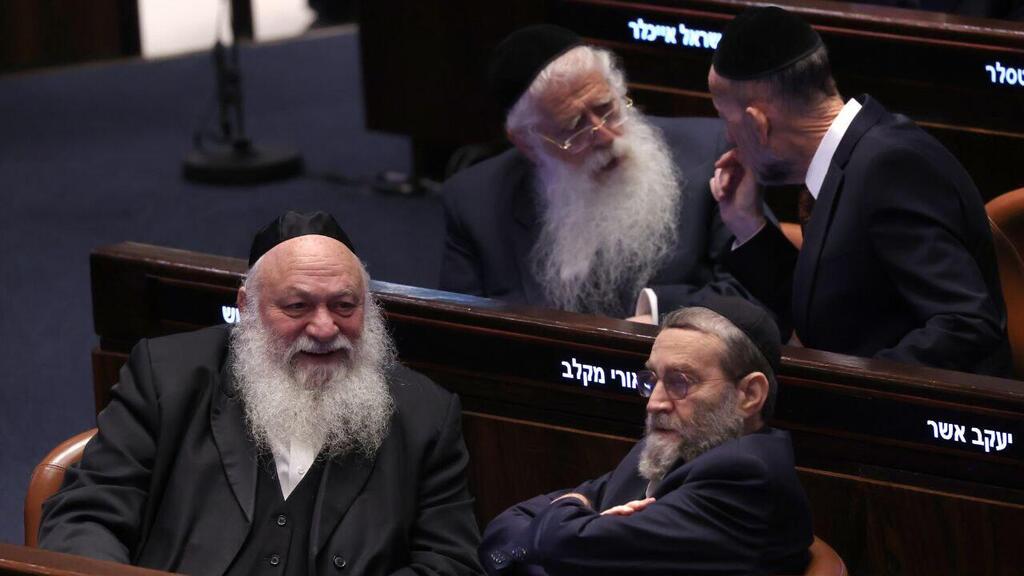
Representatives of Orthodox parties in the Knesset
(Photo: Alex Kolomoisky)
The vote on the state budget, which was supposed to take place on the evening of January 26 in the Knesset, was postponed to a later date at the request of the Orthodox. In particular, it became known that they demanded a meeting and discussion with the Knesset legal service on issues related to the conscription law even before the vote on the budget.
Budget discussions were scheduled to begin at 7:00 pm and continue late into the night. The coalition also agreed that the draft state budget and the law on economic regulation, which are adopted by the package, after approval, will not go to the commissions for revision until the Knesset approves the law on conscription.
The turning point of the parliamentary processes was the demand of the legal adviser of the Knesset Foreign Affairs and Defense Committee, lawyer Miri Frankel-Shor. She insists the text of the law needs to be amended to ensure it stands up to constitutional scrutiny, amid efforts by the Orthodox to derail yeshiva student conscription initiatives.
Orthodox lawmakers are pushing for a mechanism to lower annual conscription targets if the IDF does not create enough service routes tailored to the ultra-Orthodox lifestyle. Frankel-Shor objects and warns that such an approach effectively robs the law of its content.
Under the bill, which in its current version is called the Bismuth Law, the commission that will oversee the conscription law will be headed by a retired IDF general and two lieutenant colonels – one from the Planning Directorate and the other from the Personnel Directorate.
In addition, the commission will include a retired major, a graduate of an Orthodox institution, leading an Orthodox lifestyle, as well as a retired religious judge – dayan, who will be appointed by the chief of the general staff on the recommendation of the chief rabbi of Israel.
Long before the state budget law was put to the vote, the Orthodox warned that even if they supported it together with the coalition, they would not vote for the budget in the second and third readings unless Netanyahu “brought” them a law to free the ultra-Orthodox from the army.
At the same time, Finance Minister Bezalel Smotrich is trying to put pressure on the Orthodox so that they do not interfere with the discussion of the budget program in the Knesset committees, since otherwise they may not meet the deadline (March 30), but they refuse.
The Foreign Affairs and Defense Commission is expected to hold a lengthy meeting on January 26 on the draft law. Another one is scheduled for January 29th and early next week.
It is unclear what changes the Orthodox and the coalition will demand to make to the bill and what compromises the rabbis will agree to. But there is no doubt that the debate will revolve around the conscription targets established in the law.
Upon completion of all approvals, the bill will go to a vote in the Foreign Affairs and Defense Committee, and then to a plenary session of the Knesset.
Netanyahu has two possible scenarios for the development of events. According to the first, the law is approved in the Knesset, the Orthodox return to the government and coalition, the budget passes the second and third readings by the end of March, elections will take place within the calendar period (from September to October).
The second option is possible if the law on conscription is not approved. In this case, Netanyahu will ask the Orthodox to support the budget in any case, knowing that they will suffer the most if the document fails.
The coalition will accept the budget, but will disintegrate after agreeing on a date for early elections (tentatively June). There is a high probability that the Haredim will agree to such a plan even in the absence of a conscription law.