
In the wild landscapes of East Africa, it’s often the largest animals that capture our attention – elephants crossing dusty plains, lions resting in the shade, giraffes silhouetted against the horizon. But beneath your feet, an entirely different drama is unfolding. One that is smaller, faster, and arguably just as formidable.
Safari ants, also known as driver ants (Dorylus species), are among the most fascinating – and fearsome – creatures you may encounter on safari. Tiny in size but immense in impact, these ants move with purpose, operate with precision, and play an essential role in maintaining the balance of their ecosystems.
Anatomy: Built for Function, Not Comfort
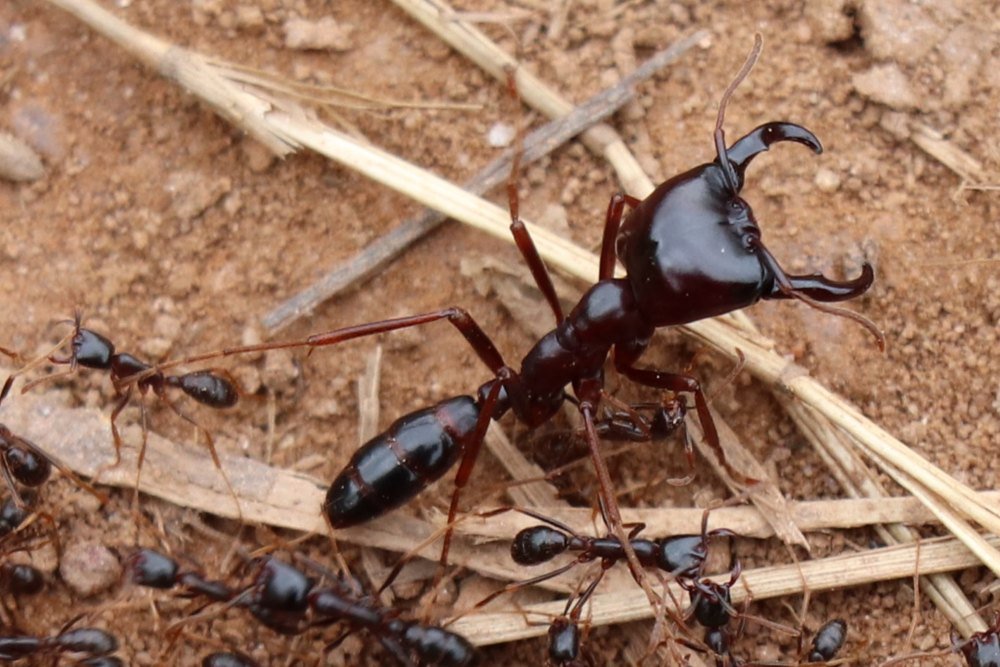
At first glance, safari ants may all look the same: dark, glossy bodies moving in relentless waves. But a closer look reveals a highly specialised society, with individuals physically adapted to their roles. Like all ants, safari ants have three main body segments: the head, thorax, and abdomen. Their antennae are constantly in motion, sensing chemical trails and signals, while their powerful mandibles – particularly in certain castes – are their most defining feature.
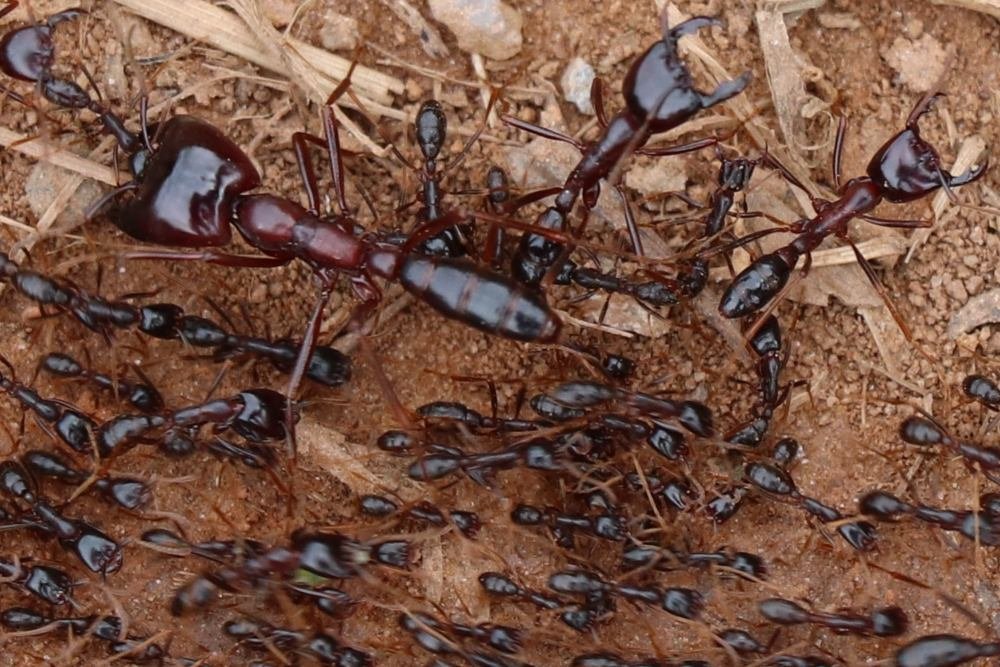
What’s striking is the variation in size within a single colony. Worker ants range from relatively small individuals to much larger, more robust forms. Then there are the soldiers: significantly bigger, with oversized heads and long, curved jaws designed for defence and heavy-duty tasks.

The queen, rarely seen, is another story altogether. She is vastly larger than any other member of the colony, with a body adapted for one primary purpose – reproduction. In fact, she can lay millions of eggs over her lifetime, ensuring the colony’s continued dominance.
Strength in Numbers: The Moving Columns
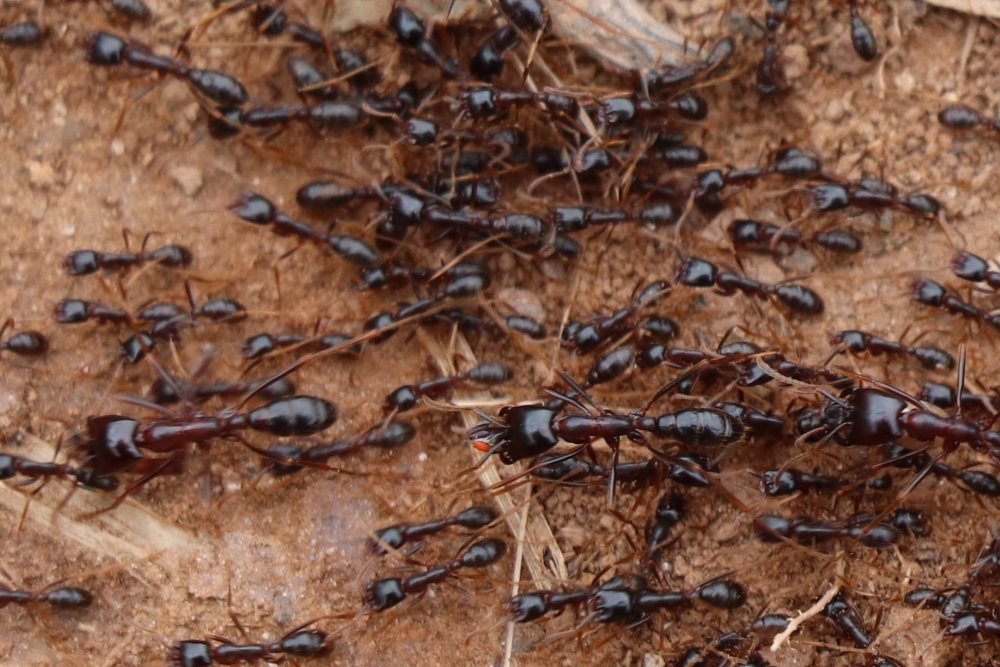
Perhaps the most iconic behaviour of safari ants is their movement in long, purposeful columns. These living rivers of insects can stretch for metres, sometimes even kilometres, sweeping across the landscape with astonishing coordination.
But this is no random march. Safari ants are nomadic, meaning they do not establish permanent nests. Instead, they move periodically, forming temporary bivouacs made from their own bodies. When it’s time to relocate or hunt, they form organised columns that allow them to travel efficiently and overwhelm prey through sheer numbers.
Each ant follows a chemical trail laid down by scouts, ensuring the entire colony moves as one cohesive unit. This system allows them to navigate complex terrain, avoid obstacles, and maintain structure even as thousands – or millions – of individuals move together. For anything caught in their path, escape is the only option.
Roles Within the Colony
A safari ant colony is a masterclass in organisation. Every individual has a role to play, and the success of the colony depends on this division of labour. Workers are the backbone of the colony. They forage, care for the young, build and maintain the bivouac, and transport food. Smaller workers tend to focus on brood care, while larger ones take on more physically demanding tasks.
Soldiers are the defenders. Easily recognisable by their large heads and formidable mandibles, they protect the colony from threats and help subdue larger prey. When the column is moving, soldiers often line the edges, creating a living barrier.
The Queen remains at the centre of it all. She is protected at all times, surrounded by workers, and is responsible for producing the next generation. Her sheer size – sometimes several times that of a worker – is a testament to her importance. This structured hierarchy ensures efficiency, resilience, and the ability to respond rapidly to changing conditions.
Jaws of Remarkable Power
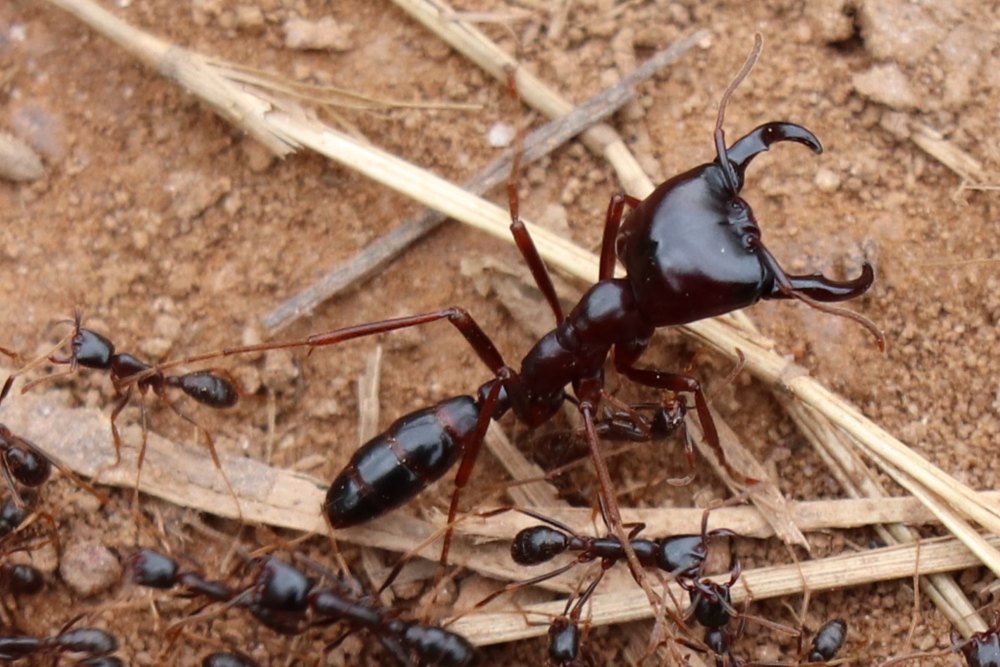
If safari ants have a signature feature, it is undoubtedly their jaws. The mandibles of soldier ants are not only large but incredibly strong. Designed like curved blades, they can grip, cut, and hold with impressive force. These jaws are essential for defending the colony against predators and for breaking down prey during hunts.
Unlike many insects, safari ants rely less on venom and more on mechanical strength. Once a soldier ant clamps down, it is not easily dislodged. In fact, their grip is so tenacious that it has been utilised by humans for generations.
A Traditional Use: Nature’s Sutures
Among the Maasai, safari ants have long been recognised not just as a force of nature, but as a practical tool. In remote areas where modern medical supplies were not readily available, the powerful jaws of soldier ants were used to close wounds. The process is both simple and ingenious.
The edges of a cut would be brought together, and a live soldier ant would be encouraged to bite across the wound. Once its mandibles had locked into place, the body of the ant would be twisted off, leaving the head attached and holding the wound closed.
Multiple ants could be used in this way, effectively stitching the skin together. It is a vivid example of how closely human life has been intertwined with the natural world – and how even the smallest creatures can serve a vital purpose.
Ecological Importance
Beyond their dramatic behaviour and unique adaptations, safari ants play a crucial ecological role. As they move through the landscape, they act as efficient predators, controlling populations of other insects and small animals. Their raids can flush out hidden creatures, creating feeding opportunities for birds and other predators that follow in their wake.
In this way, safari ants contribute to a broader web of interactions, supporting biodiversity and maintaining balance within their habitats. They also serve as nature’s clean-up crew, breaking down organic matter and recycling nutrients back into the ecosystem.
A Different Kind of Safari Sighting
While you may not set out on safari hoping to encounter a column of ants, witnessing safari ants in action is an unforgettable experience. There is something both humbling and awe-inspiring about their collective power – a reminder that size is no measure of significance in the natural world.
Next time you’re in camp or out on a walk, take a moment to look down. You might just find yourself watching one of East Africa’s most remarkable spectacles, unfolding quietly beneath your feet. Small, fearless, and endlessly efficient, safari ants are proof that even the tiniest creatures can leave a lasting impression.
Start planning your East Africa safari adventure today