




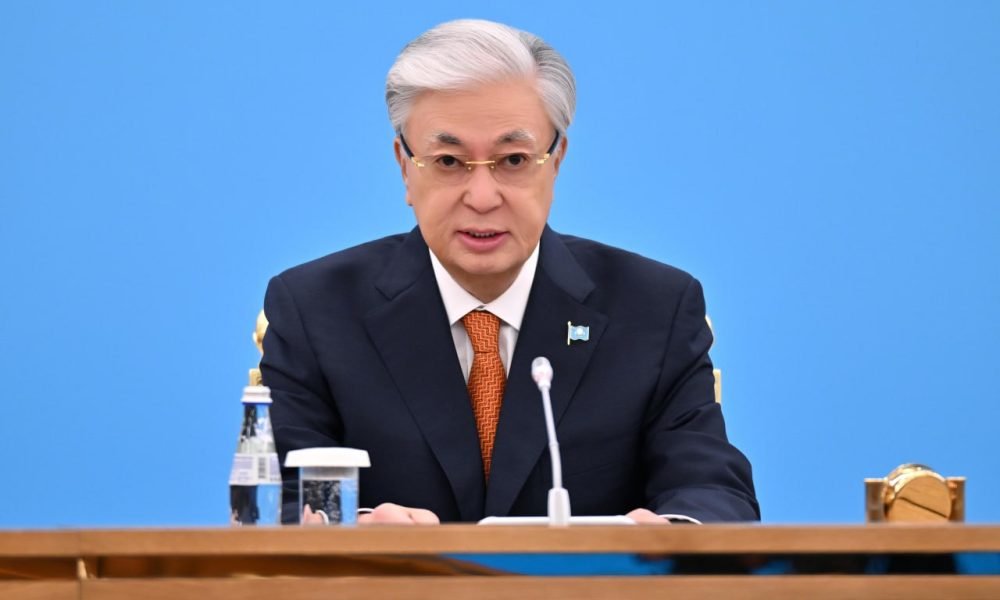

At a time of mounting geopolitical uncertainty and shifting global power dynamics, Kazakhstan’s President Kassym-Jomart Tokayev has issued a stark warning about the growing fragility of the international system, urging renewed commitment to multilateralism, institutional reform, and responsible leadership.
Speaking at the Antalya Diplomacy Forum on 17 April, President Tokayev took part in a high-level panel titled “Mapping Tomorrow, Managing Uncertainties”, where he outlined his vision for navigating an increasingly complex global landscape marked by expanding regional conflicts and weakening international institutions.
A system under strain
Central to Tokayev’s message was the need to revitalise the United Nations, which he described as an “indispensable and universal organisation” despite its growing limitations. While acknowledging broad agreement on the need for reform, he pointed to a persistent lack of progress—particularly within the UN Security Council—as a major obstacle to effective global governance.
He warned that key negotiations on major conflicts are increasingly taking place outside UN frameworks, raising concerns about the organisation’s marginalisation and long-term relevance. According to Tokayev, elements of the UN Charter itself now reflect outdated geopolitical realities, underscoring the urgency of structural reform.
Leadership in an age of uncertainty
In a world where local conflicts increasingly have global repercussions, Tokayev emphasised the importance of what he termed “strategic restraint.” He argued that responsible leadership today must prioritise caution, discipline, and pragmatism, particularly when dealing with issues of peace and security.
The Kazakh president highlighted how regional crises are no longer contained geographically, but instead ripple across borders, affecting global markets, alliances, and stability. In this context, he called on political leaders to avoid escalation and adopt a more measured approach to decision-making.
Middle East tensions and global consequences
Turning to the Middle East, Tokayev described the situation as highly complex, urging caution in public assessments and calling on all parties to avoid further military escalation. Kazakhstan, he noted, has expressed solidarity with Gulf states while consistently advocating restraint.
He also drew attention to the broader economic implications of regional instability, particularly disruptions to energy markets and trade flows. Maintaining secure maritime routes—especially through the Strait of Hormuz—remains critical, he said, though he stressed that the core issue in the Iran context should remain nuclear non-proliferation rather than secondary economic concerns.
The rise of middle powers
A notable theme in Tokayev’s remarks was the increasing role of “middle powers” such as Kazakhstan and Türkiye in global affairs. He suggested that these countries often bring a more pragmatic and responsible approach to diplomacy, positioning them as potential mediators in an increasingly polarised world.
Tokayev highlighted opportunities for deeper cooperation between Kazakhstan and Türkiye, reflecting a broader trend towards more flexible and diversified diplomatic partnerships.
Preventive diplomacy and future challenges
Looking ahead, the Kazakh leader expressed concern over the declining effectiveness of international institutions in conflict prevention and resolution. He noted that despite decades of discussion around preventive diplomacy, global efforts remain largely reactive.
He called for a shift towards anticipating and mitigating conflicts before they escalate, while also recognising the growing impact of emerging technologies—particularly artificial intelligence—on global governance and decision-making.
A call for renewed multilateralism
Concluding his intervention, President Tokayev reaffirmed his support for multilateral diplomacy, but stressed that its success will depend on meaningful reform and renewed political will.
His remarks come at a time when global trade continues to expand, yet faces structural challenges, and when international cooperation is increasingly tested by geopolitical fragmentation.
As the Antalya Diplomacy Forum highlighted, the question is no longer whether the global system is under pressure—but whether it can adapt quickly enough to meet the demands of a rapidly changing world.
Source:
www.eureporter.co