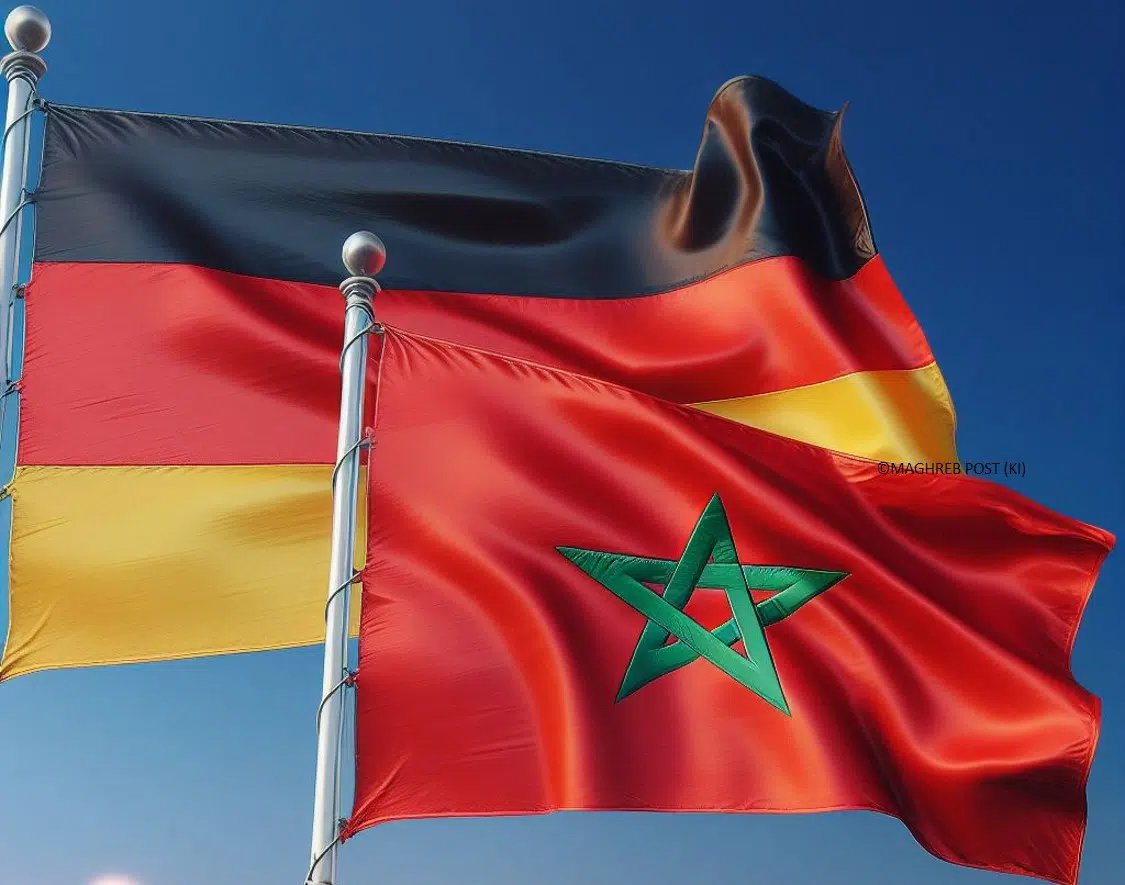
Well-known German corporations are massively expanding their presence in the Kingdom and are relying on deep integration into European value chains and technological innovations.
Rabat – On April 15, 2026, high-ranking business and diplomatic representatives gathered in Casablanca to usher in a new phase of German-Moroccan economic relations. At the invitation of the German Embassy and the German Chamber of Commerce and Industry in Morocco (AHK), several German global players presented their current expansion plans. The event highlighted the strategic realignment of many companies that no longer see Morocco as just an extended workbench, but as a central logistical and technological hub for the Euro-Mediterranean region.
Trading volume reaches a new record of 7.4 billion euros
The economic ties between Berlin and Rabat have achieved new dynamics in the past year. According to current data from AHK Morocco, the bilateral trade volume rose to a total of 7.4 billion euros in 2025, which corresponds to an increase of 10.2% compared to the previous year. German exports amounted to 3.9 billion euros (+12.0%), while imports from Morocco reached a value of 3.5 billion euros (+8.2%).
German investments are currently securing around 35,000 jobs in the Kingdom. “These investments illustrate the key role of companies in the strategic partnership between Morocco and Germany,” stated German Ambassador Robert Dölger during the event. The aim is to accelerate the integration of the Moroccan economy into European value chains.
Logistics and automotive as engines of industrial expansion
One focus of the new investments is in the logistics sector. The service provider Dachser, which has been active in the country since 1982, announced the construction of a new logistics center in Tanger Automotive City. A platform is to be built on an area of 75,000 m² by the end of 2027 that will enable Moroccan customers to connect to Europe at the level of the European internal market. The project also relies on ecological standards: photovoltaic systems and systems for wastewater recovery are planned, among other things.
At the same time, the automotive supplier Leoni is pushing ahead with its expansion. An investment of 230 million Moroccan dirhams (MAD) in a new factory in Agadir is expected to create over 3,000 direct jobs by 2027. The group plans to expand its total workforce in Morocco to a total of 23,000 employees by 2027. In doing so, the company is consolidating the Kingdom’s position as a key pillar of its global industrial strategy.
Pharmaceutical production and artificial intelligence set technological accents
Commitment is also growing beyond traditional industrial sectors. The Bayer Group is investing around 200 million dirhams in its site in Nouaceur. Between 2026 and 2028, three new production lines are scheduled to go into operation there to produce up to 40 different recipes locally – including well-known brands such as Aspirin and Rennie. The goal is to triple export sales, especially to Europe.
The company Energie Noire, a subsidiary of the German MikroPlan Group, is positioning itself in the area of digitalization. The opening of technology centers in Casablanca and Khouribga is expected to create up to 400 highly qualified jobs in the areas of software development and artificial intelligence in the medium term. An IT academy in Fes planned for the end of 2026 is also intended to secure the next generation of skilled workers for the digital transformation of Moroccan medium-sized companies.
Strategic context and long-term framework conditions
The current development is embedded in a close-knit network of bilateral agreements. In addition to the double taxation agreement of 1972 and the investment protection agreement of 2008, the PAREMA energy partnership (2012) and the climate alliance of 2023 have paved the way for German companies. Morocco benefits from its geographical proximity to Europe and its stable positioning as a platform for nearshoring. According to Katharina Felgenhauer, Managing Director of AHK Morocco, the diversity of sectors reflects the growing attractiveness of the location, which is increasingly perceived as a driver for sustainable value creation in the region.
Morocco – Record value in trade with Germany reaches 7.37 billion euros
Source:
maghreb-post.de