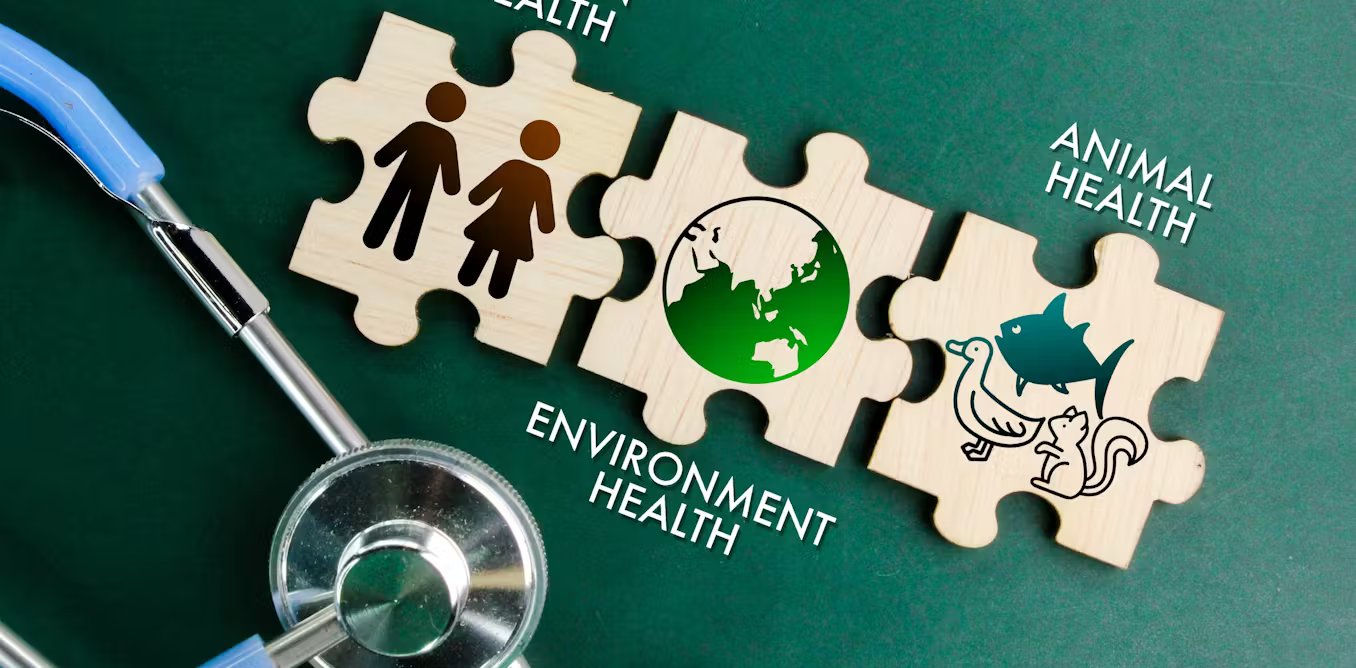

Climate-sensitive diseases and zoonoses, antimicrobial resistance (AMR), sustainable food systems and exposure to pollution – the main factors fuelling infectious and non-communicable diseases were the focus of this year’s One Health Summit.
These hot topics for the global health community are central to One Health Atlas – a comprehensive, science-led guide to the wealth of initiatives behind the “One Health approach”.
Below are some excerpts from the book, which maps out the interconnections between human, animal, plant and environmental welfare and details One Health’s widely endorsed but “difficult-to-fund approach” :
Interest in One Health has risen among health institutions at local, regional and global levels, particularly since the 2019 SARS-CoV-2 pandemic.
The One Health approach, which acknowledges the interdependence between human, animal and ecosystem health, is now promoted by the Quadripartite Alliance₁.
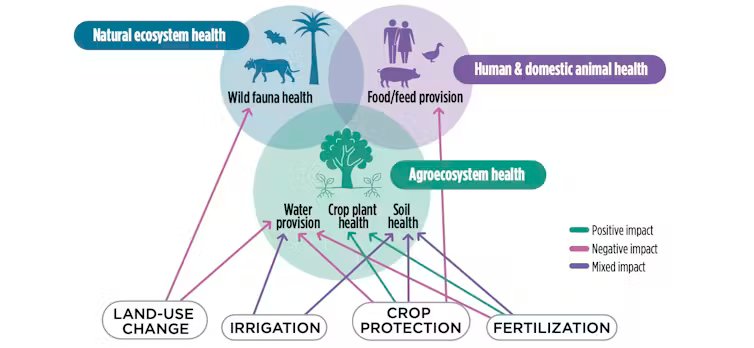
It has also been mainstreamed by international financial institutions, such as in the World Bank’s One Health Operational Framework and the IDA20 Policy Commitments on One Health. Donors have begun providing funding or financing (…), not only in pandemic prevention, preparedness and response (PPR), but also increasingly in other streams focused on biodiversity, climate change and more.
However, the financing landscape is highly fragmented with many vertical, mostly public health-centric mechanisms.
They often react to health crises, rather than reducing risk at the source or breaking the panic– neglect cycle. The COVID-19 crisis triggered a paradigm shift, and specific (although limited) funding dedicated to One Health is now emerging, with two major initiatives worth noting.
In 2020, the French Development Agency (AFD) launched its NGO Sector Innovation Facility (FISONG OH), an innovative financial mechanism to support One Health. Initially intended for general NGO financing, this fund provided EUR 2.5 million for One Health projects in 2020.
In 2022, the World Bank (in collaboration with WHO) established the Pandemic Fund, a Financial Intermediary Fund designed to provide a dedicated stream of long-term financing to strengthen PPR capabilities in low- and middle-income countries. This fund has generated nearly USD 2 billion and supports One Health initiatives in 80 % of its projects. The Pandemic Fund managed to raise six US dollars for every dollar in grant funds.
Pragmatic approaches for One Health investments have been proposed through frameworks considering risks, co-benefits and stakeholder financial capacity for a fairer distribution of costs and benefits.
The Pandemic Fund’s first call for proposals also showed strong demand from beneficiary countries for strengthening public health systems, while raising questions about their capacity to effectively integrate One Health into their health systems.
These concerns echo the debates over the inclusion of One Health and financing provisions in the 2025 international Pandemic Agreement, which seeks to strengthen global preparedness for future health crises.
₁. The World Health Organization (WHO), the World Organisation for Animal Health (WOAH), the Food and Agriculture Organization of the United Nations (FAO), and the United Nations Environment Programme (UNEP).
More than 170 online and offline events are being held across France and internationally as part of the ongoing One Health Festival until May 15.
Passages by Camille Caffier, Franck Berthe, Marisa Peyre from The One Health Atlas were featured in this article.
Source:
theconversation.com