





Stadler Signs €263 Million Contract to Supply FLIRT Electric Trains for Regional Transport in Greater Poland
(IN BRIEF) Stadler has signed a €263 million contract with the Marshal’s Office of the Greater Poland Province to deliver up to 20 FLIRT electric multiple units for regional and agglomeration rail services. The initial order covers 10 five-car trains with an option for an additional 10 units, with the first vehicles expected to enter service in early 2028. The trains will be manufactured in Poland and designed in part by Stadler’s engineering team in Poznań. Featuring lightweight aluminum construction, the FLIRT units are designed to reduce energy consumption and operating costs while providing modern passenger amenities and accessibility features. Each train will accommodate up to 632 passengers and operate at speeds of up to 160 km/h. The agreement further strengthens Stadler’s presence in Poland, where the company operates multiple production, engineering and service facilities employing more than 2,000 people.
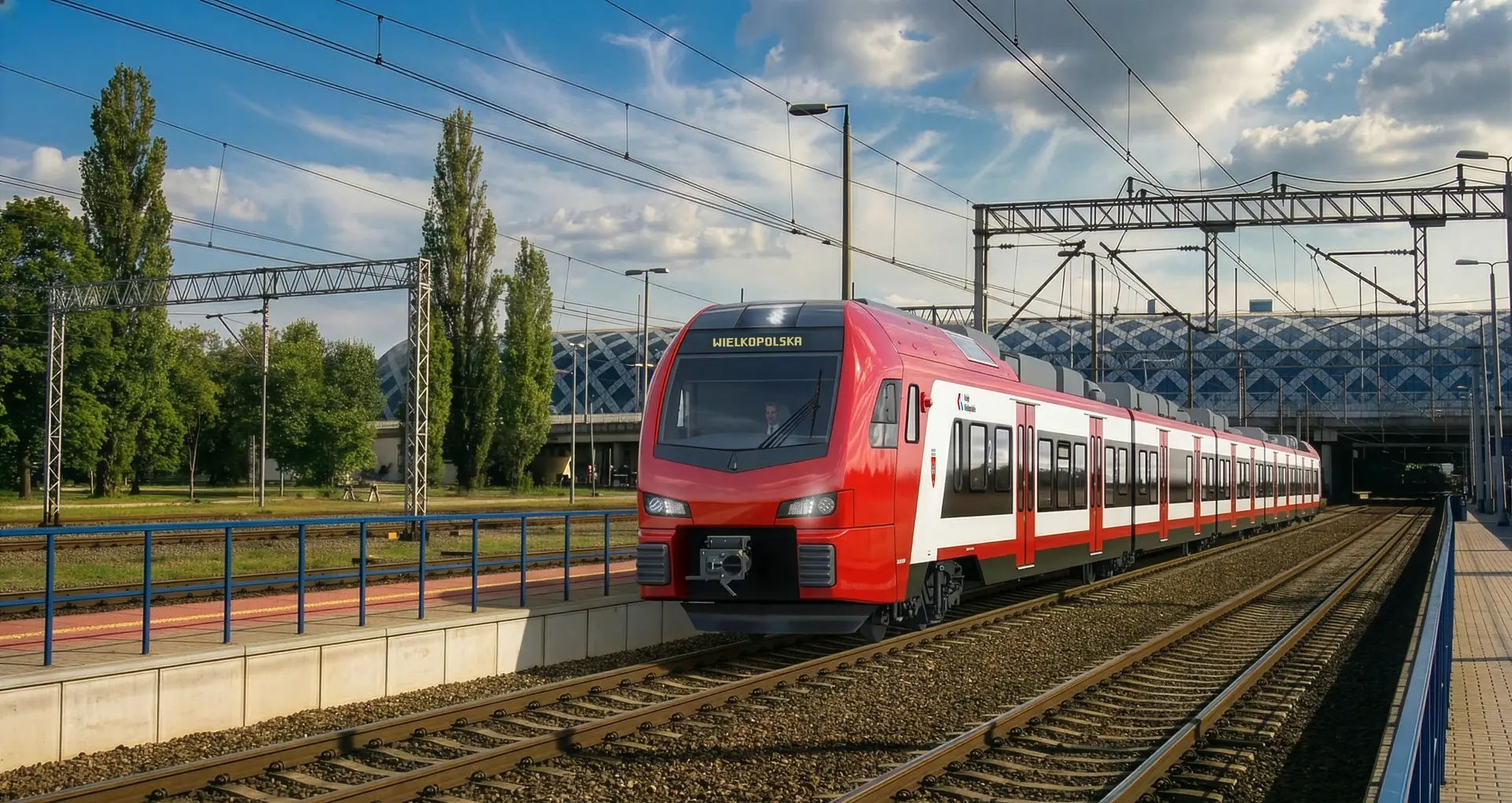
(PRESS RELEASE) POSNAṄ, 13-Mar-2026 — /EuropaWire/ — Stadler has signed a contract with the Marshal’s Office of the Greater Poland Province for the delivery of up to 20 FLIRT electric multiple units (EMUs) intended for regional and agglomeration rail services in the Greater Poland region. The agreement marks another step in strengthening sustainable public transport infrastructure in Poland, with the new trains expected to begin entering service in early 2028.
The contract, valued at approximately €263 million, includes an initial order for 10 five-car FLIRT units, along with an option to purchase an additional 10 trains. The new fleet will support the modernization of regional railway transport by improving passenger comfort while also lowering energy consumption and operational costs. The trains will be manufactured in Poland, reinforcing Stadler’s long-term commitment to the local rail industry.
According to Radosław Banach, President of the Management Board of Stadler Polska, the trains will be based on Stadler’s latest generation of the FLIRT platform. The FLIRT family is the company’s most widely deployed train concept worldwide, with more than 3,000 vehicles sold in 24 countries. Banach noted that Stadler’s manufacturing facility in Siedlce has already produced more than 650 FLIRT vehicles for operators in 18 countries, including 127 units currently operating in Poland.
A key aspect of the project is its strong regional engineering contribution. The new trains will be designed by Stadler Polska engineers, including a team based in Poznań, creating additional value and expertise within the Greater Poland region. Stadler’s engineering workforce in the region currently includes around 100 specialists, roughly half of whom are located in Poznań. The company plans to expand this team further by recruiting an additional 20 engineers during the year.
The FLIRT platform is recognized for its lightweight construction and operational efficiency. Built with aluminum-bodied structures, the trains consume less energy compared with conventional steel-bodied vehicles. This design reduces operating costs for rail operators while also lowering environmental impact, making the trains particularly suitable for regions investing in sustainable public transport systems.
The new five-car trains will be designed to provide a high level of passenger comfort and accessibility. They will feature wide entrance areas, a large proportion of low-floor space, and full accessibility for passengers with reduced mobility. This includes facilities for wheelchair users, parents traveling with prams, and passengers with bicycles.
The trains will also be equipped with modern passenger amenities and safety technologies. These include ETCS Level 2 signalling systems, air conditioning, CCTV monitoring, a modern passenger information system, onboard wireless internet and safety equipment such as defibrillators and emergency intercoms. Each unit will be capable of carrying up to 632 passengers, including 266 seated, and will operate at speeds of up to 160 km/h.
The agreement highlights Stadler’s expanding presence in Poland, where the company has been active since 2006. Over the years, Stadler has continued to invest in local manufacturing, engineering and service capabilities. Today the company employs more than 2,000 people in Poland, operating production facilities in Siedlce, Środa Wielkopolska and Białystok, engineering offices in Poznań, Siedlce and Warsaw, and service centres in Łódź and Sochaczew.
The signing ceremony for the contract included representatives from both organizations, including Arkadiusz Świerkot, Member of the Board of Stadler Polska; Radosław Banach, President of Stadler Polska; Marek Woźniak, Marshal of the Greater Poland Voivodeship; and Wojciech Jankowiak, Deputy Marshal of the Greater Poland Voivodeship.
About Stadler
Stadler has been building trains for over 80 years. The provider of mobility solutions in rail vehicle construction, service and signalling technology has its headquarters in Bussnang in eastern Switzerland. Over 17,100 employees work at eight production and six engineering sites and over 80 service locations, including around 6,000 employees in Switzerland. Stadler is the world’s leading manufacturer of vehicles with alternative drive systems (hydrogen and battery) and rack railway vehicles. The company is aware of its social responsibility for sustainable mobility and therefore stands for innovative, sustainable and durable quality products.
Follow Stadler on LinkedIn, Instagram, YouTube, and Facebook
Media Contact:
Marta Jarosińska
Head of Communication and Marketing
Stadler Polska Sp. z o.o.
Phone: +48 601 198 003
Email: marta.jarosinska@stadlerrail.com
www.stadlerrail.com
SOURCE: Stadler
MORE ON STADLER, ETC.:
Source:
news.europawire.eu