


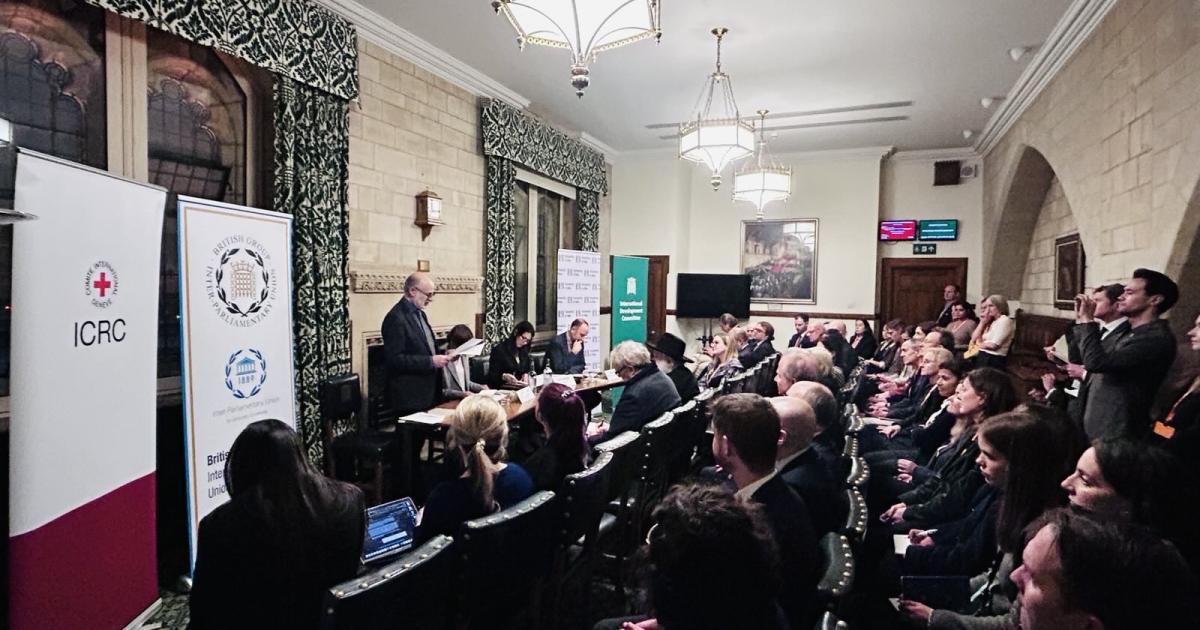

With opening remarks from Fabian Hamilton MP, panellists discussed the importance of IHL, how states such as the UK can apply leverage to ensure compliance among allies, what role parliamentarians can play in advancing IHL as a political priority, and in what ways such legal obligations must form part of the narrative around global security and increased defence spending. In a world of multiplying conflicts, rearmament, and deepening instability, the call to galvanize political commitment to IHL carried particular urgency.
« Supporting and enhancing international humanitarian law is a vital component of any democracy. Working with our partners from elected bodies around the world, the UK has the global reputation and diplomatic corps to play a leading role. The ICRC has rightly highlighted the growing importance of using humanitarian aid for protection, not to be used as a political tool. It’s vital that we continue to support this work in the UK Parliament and ensure it forms a central part of UK foreign policy. »
– Fabian Hamilton MP, Chair of the British Group of the Inter-Parliamentary Union (BGIPU)
A Q&A session followed, moderated by Freddie Carver, Director of the Humanitarian Policy Group at ODI Global. The audience, comprising members and staff of the House of Commons and House of Lords, government officials, and partners across NGOs, think tanks, and academic institutions, prompted a debate around the applicability of Geneva Conventions more than 75 years after their adoption.
Despite being universally ratified, commitment to uphold these conventions is at risk of being eroded, with catastrophic consequences. The ICRC President made a clear call: IHL must be upheld both in letter and spirit in today’s wars and the next. Otherwise, the world risks spiraling into conflicts of unprecedented cost.
We acknowledge Source link for the information.


